OIST Innovation
Incubating impact: Building a multinational academic innovation ecosystem.
What we did
Strategic Facilitation, Sub-Brand Strategy, Naming, Identity System

Creating Innovation for The Okinawa Institute of Science and Technology.
OIST Innovation existed to incubate and accelerate innovations with international impact while driving economic growth and transformation in Okinawa. But the organization couldn't explain this mission. A confusing portfolio of programs — TDIC, I2 accelerator, various innovation initiatives — undermined conversations.
The challenge extended beyond naming. OIST needed organizational architecture that clarified a fragmented portfolio, a brand framework that worked in both Japanese and English, and strategic positioning that resonated with stakeholders from graduate researchers to government funders to the Okinawa community.
Rather than beginning with naming or visual identity, we started upstream with organizational architecture. Our four-phase approach began with sensemaking: through workshops with OIST leadership, government partners, and funders, we diagnosed the sources of confusion and the strategic value.
Brand Strategy and Naming
Discovery revealed a core insight — the organizing logic didn't align with how stakeholders thought about innovation support. The strategizing phase produced a business architecture organizing programs into four strategic streams: Technology Development & IP, Partnerships, Startup Programs, and Entrepreneurship, all unified under OIST Innovation. Each stream had clear governance and measurable outcomes connected to national economic development goals.
The brand strategy balanced the demonstration of institutional credibility through evidence with the telling of authentic stories. We built a message framework recognizing how different audiences make meaning. Government funders needed logic, evidence, and measurable proof. Community stakeholders responded to the narrative, authentic stories that connect OIST's work to Okinawa's regional development.
The framework gave OIST Innovation a sense of organizational self that could accelerate decision-making. When OIST launched a new entrepreneur-in-residence program six months after brand launch, staff knew exactly where it belonged in the architecture, which stakeholders to engage, and which message framework to apply.
Through scaling workshops and training, OIST staff internalized the brand framework, learning not just what to say but how to make strategic communication decisions independently. the bilingual brand system acknowledged that translation isn't just linguistic conversion — it's cultural adaptation, respecting Japanese communication patterns while maintaining institutional voice across languages.
OIST Innovation’s success meant teams making confident strategic decisions without consultants in the room, government funders understanding academic innovation as infrastructure investment, and the Okinawa community seeing OIST as a genuine partner in regional economic development.

Brand Styleguide
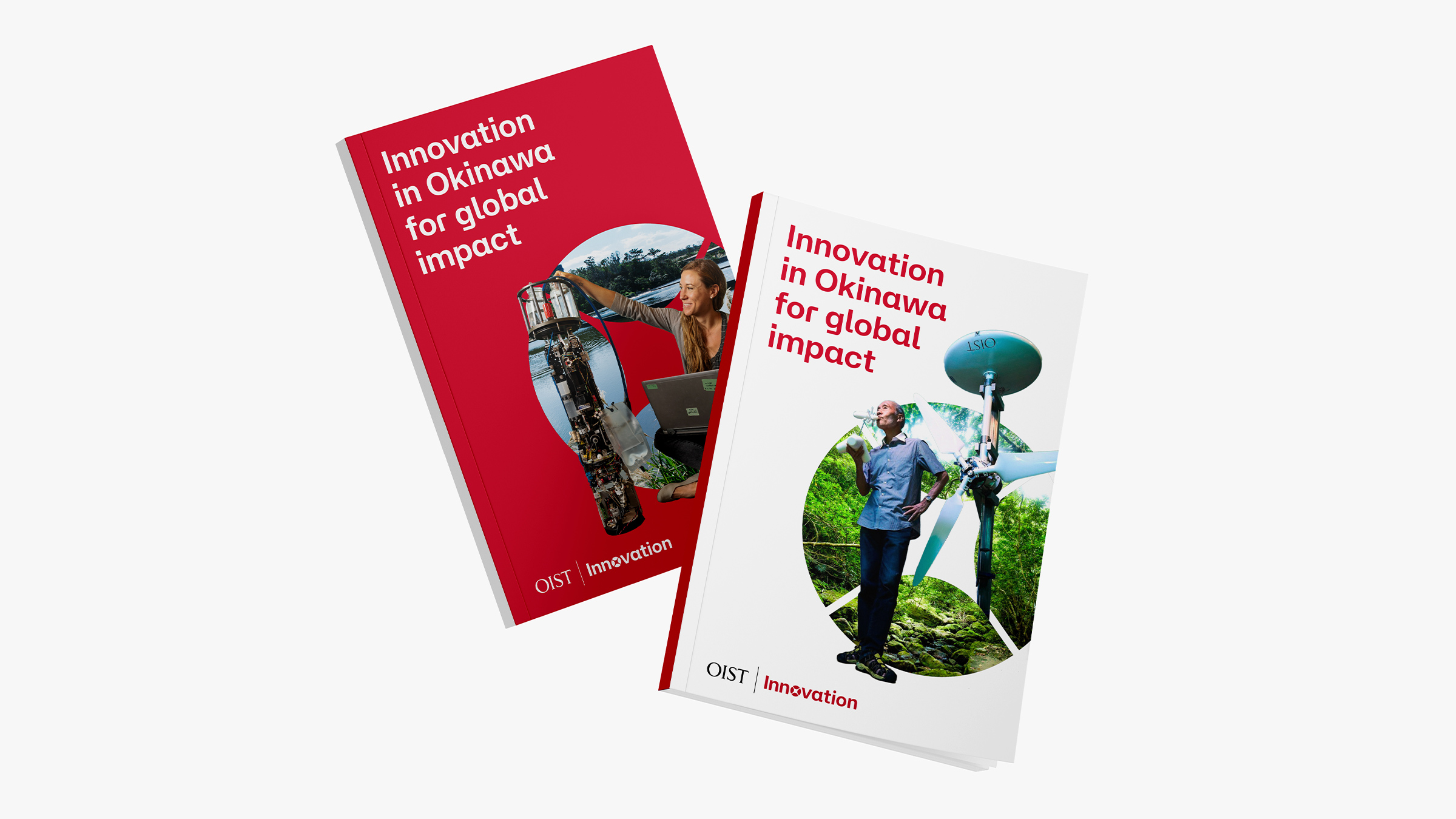
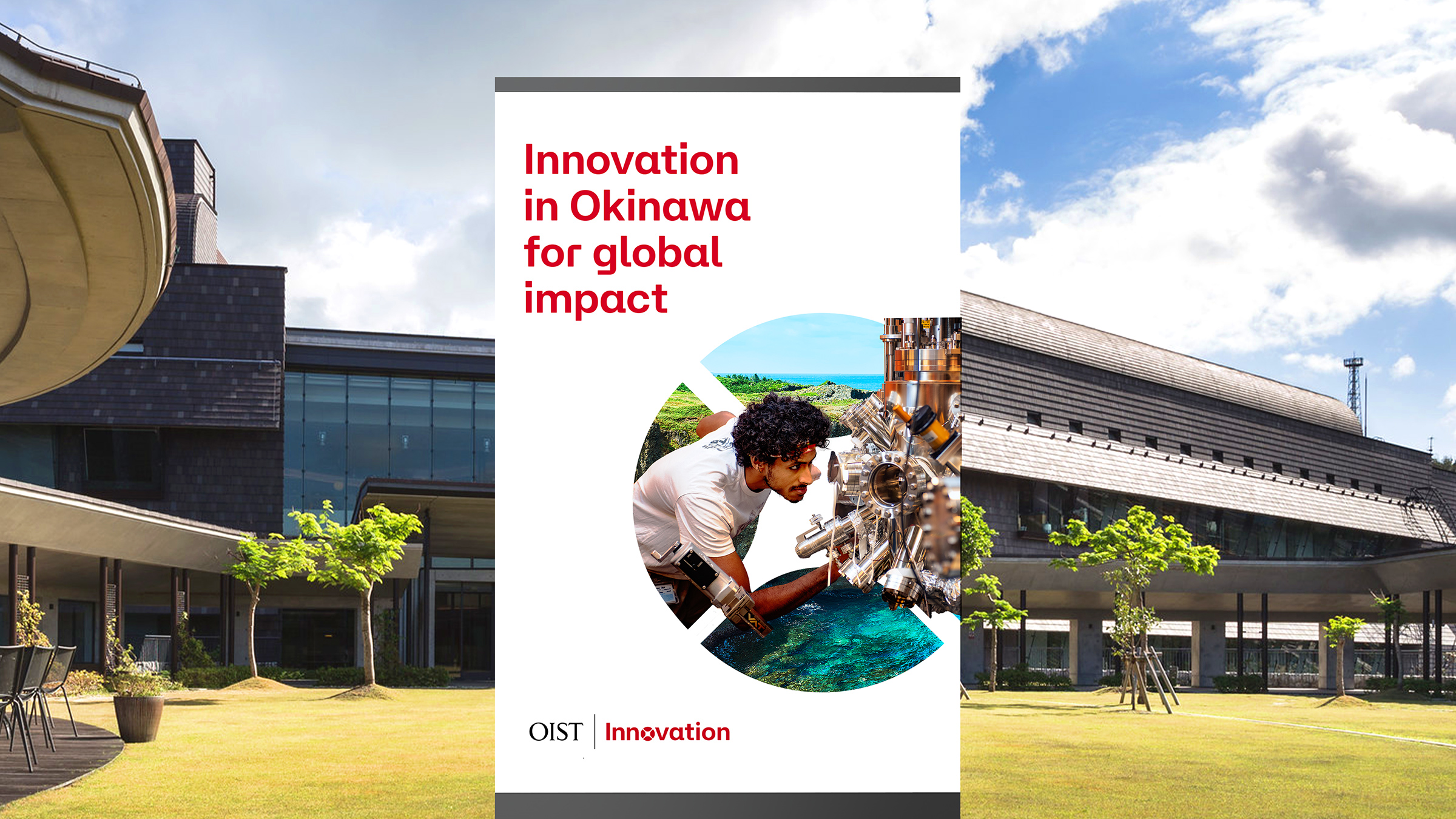
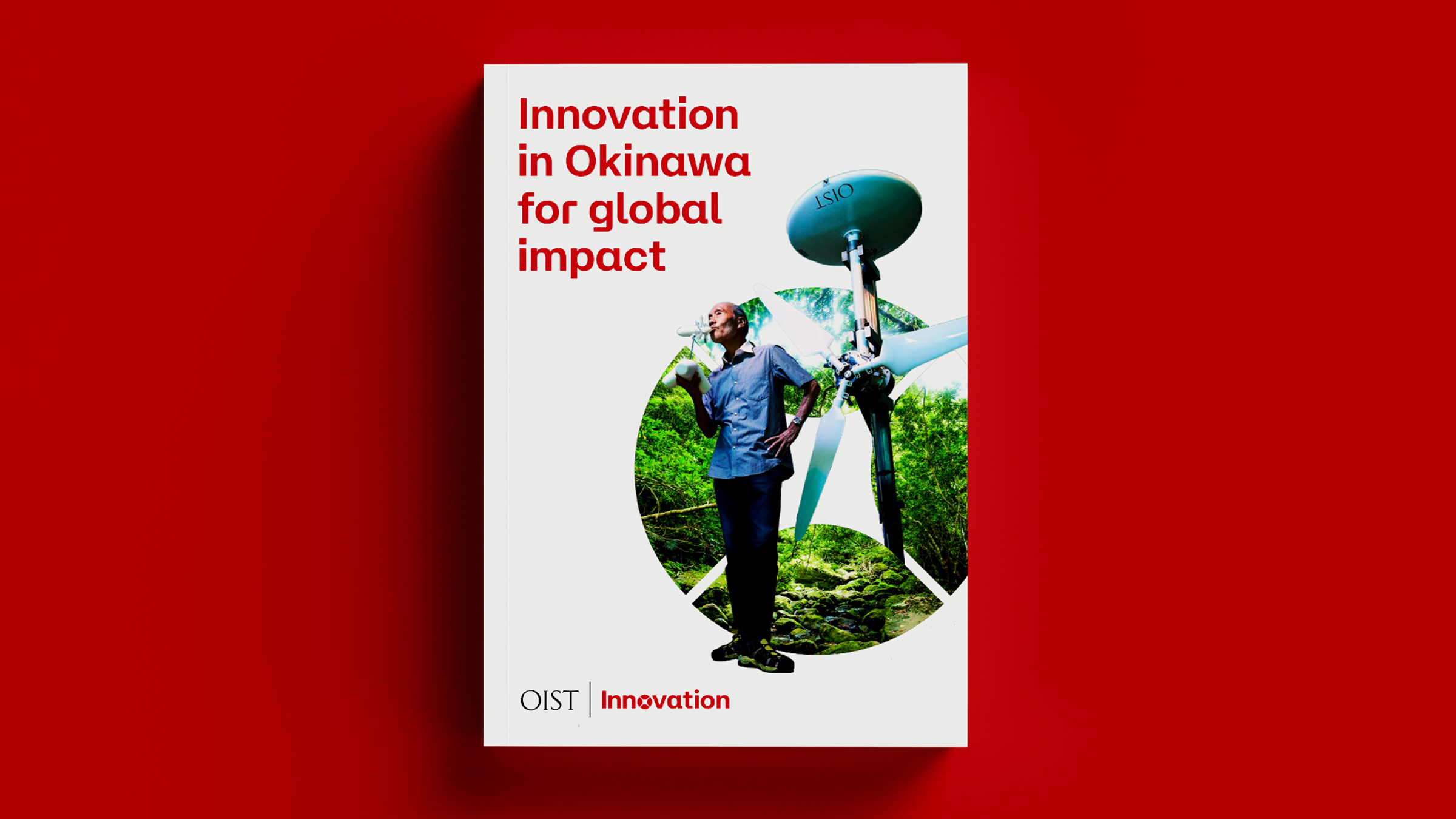
The project culminated in a visual identity system that strikes a sophisticated balance between unique departmental flair and the enduring prestige of the OIST institution. The resulting visual system serves as a versatile toolkit, providing clear guidelines for co-branded lockups that allow OIST Innovation to stand alongside international corporate leaders without losing its distinct identity. This strategic design framework does more than just modernize the department’s appearance; it builds a bridge between the laboratory and the marketplace, signaling to the world that Okinawa is a premier destination for scientific commercialization and entrepreneurial growth.